


Commercial Fire Pit & Fire Table Specifications: A Hospitality Procurement Guide
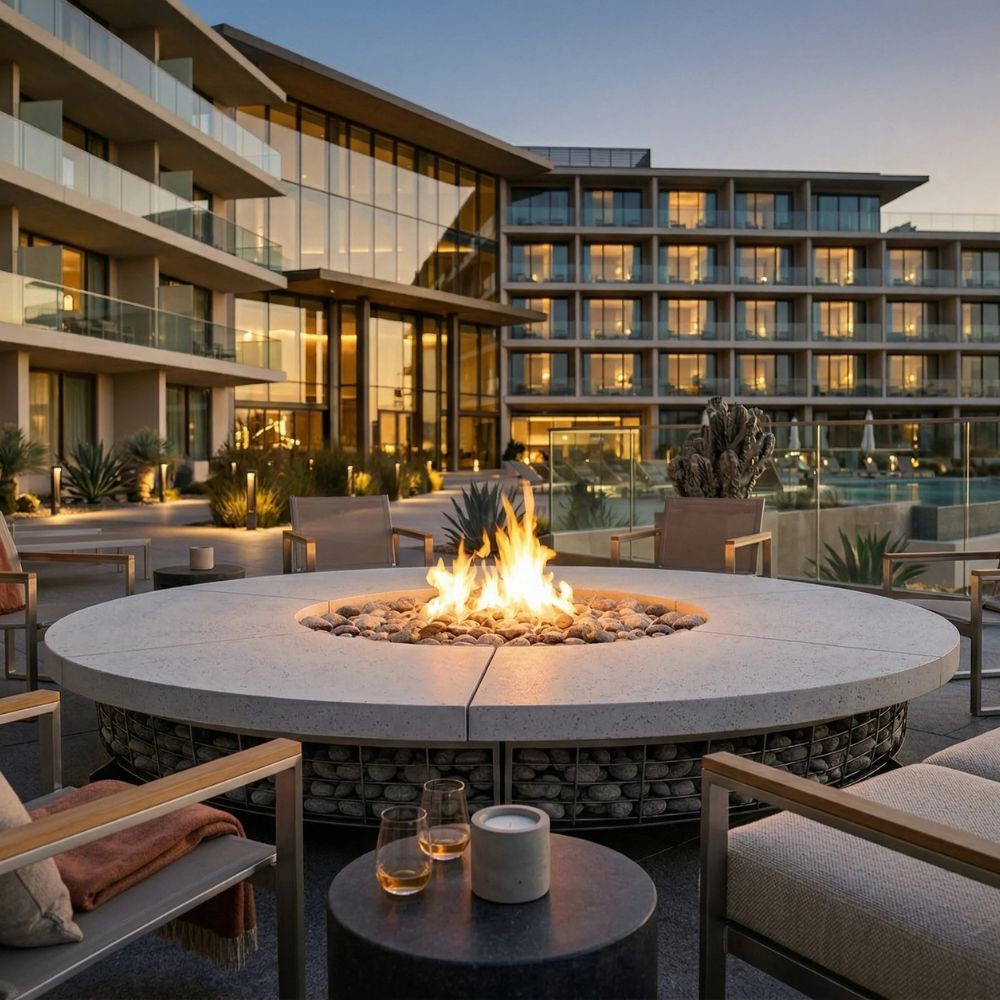
Outfitting a hotel pool deck, restaurant patio, or event venue with fire tables calls for a different level of specification than a residential purchase. You're weighing guest safety, code and certification obligations, wear from constant high-traffic use, and how fast your maintenance team can reset a space between events.
For most commercial fire table projects, the specs worth focusing on are fuel type, BTU output, ignition and safety controls, certification, construction, and mobility. Nailing these down at the procurement stage helps you avoid installation snags, operational headaches, and surprise maintenance bills down the road.
This guide walks through the specifications hospitality and commercial buyers should review before comparing available fire pits and fire bowls and placing an order.
Commercial Fire Table Specifications at a Glance
|
Specification |
What to Determine |
Why It Matters |
|
Fuel type |
Natural gas or LP |
Determines installation requirements, operating logistics, and mobility |
|
BTU output |
Required heat and flame output |
Should match table size, seating area, and environmental conditions |
|
Ignition system |
Electronic, battery-powered, flame-sensing, or manual |
Affects operation, safety, infrastructure, and staff procedures |
|
Safety controls |
Flame sensing, emergency shutoff, E-stop, lockout, etc. |
Important for commercial operation and risk management |
|
Certification |
Applicable product listing/certification |
May be required for permitting, insurance, and project approval |
|
Mobility |
Fixed installation or commercial casters |
Determines how easily the space can be reconfigured |
|
Construction |
Stainless steel, aluminum, powder-coated materials, etc. |
Affects durability and long-term maintenance |
|
Warranty |
Commercial-specific warranty terms |
Helps establish expected service life and total cost of ownership |
|
Lead time |
Standard vs. customized production |
Important for property openings, renovations, and seasonal launches |
1. Fuel Type and Size: Matching Output to Your Space
Fuel type is the first decision in any commercial fire table order, and it drives nearly everything that follows — installation cost, ongoing operating expense, and even where the table can be placed.
Natural gas tends to be the go-to for permanent setups like hotel pool decks and restaurant patios that already have gas lines in place. It removes the need for tank swaps, which counts for a lot when a property runs a dozen or more tables every night. The catch is that the table stays tethered to its gas connection, so relocating it typically isn't practical unless quick-disconnect equipment is built into the install.
Liquid propane (LP) offers more flexibility. Tables can be moved for private events, seasonal layout changes, or renovations without needing a fixed gas line. Commercial LP fire tables might run on standard portable cylinders stored in the base, while bigger installations can tap remote tanks with a regulated feed line to cut down on refill trips.
How many BTUs does a commercial fire pit need?
BTU output should be sized against the fire feature's dimensions and design, the seating area, wind exposure, ambient conditions, and the flame performance you're after.
Residential fire tables usually fall in the 30,000–50,000 BTU range. Larger commercial setups often call for more output. As a rough starting point, hospitality installations might need around 60,000–80,000 BTUs for typical seating areas, with bigger or more exposed setups potentially requiring 100,000+ BTUs.
Treat these numbers as planning guidance, not fixed rules — the right output depends on the specific burner, table size, installation setting, and any applicable code requirements.
It's also worth not fixating on BTU figures alone. Burner design, flame spread, wind exposure, and how close guests sit to the burner all shape how a fire feature actually performs in practice.
2. Commercial Fire Pit Ignition & Control Systems
Control systems are what separate a fire feature built for occasional home use from one meant to run constantly in a hospitality setting with changing staff and guests close by.
When sizing up an ignition system, ask four things:
-
How will staff turn the fire feature on and off?
-
What's the failsafe if the flame goes out unexpectedly?
-
Is there electrical service at the install site?
-
Does the system meet the controls required by the project, the property, and relevant regulations?
All Weather Electronic Ignition Systems (AWEIS)
All Weather Electronic Ignition Systems (AWEIS) suit installations with available electrical service and frequent fire feature use.
Depending on the configuration, an AWEIS can often connect to external controls like a light switch, timer pedestal, or other switching setup. For hospitality properties, that makes it easier to standardize operation across multiple fire features.
Evaluate any AWEIS based on the specific product's capabilities, certification, installation demands, and compatibility with your fire feature.
Timer Pedestals, E-Stops, and Lockouts
For shared-space fire features, a timer pedestal or external control system enables centralized or restricted operation. Emergency-stop and lockout features can be added where the installation calls for them.
Cooke timer pedestals come in commercial-grade builds, including powder-coated steel and stainless steel, with custom configurations available for different projects.
The right control setup depends on the fire feature itself, the site design, the electrical system, and operational needs.
Battery-Powered Electronic Ignition Systems
Battery-powered all-weather electronic ignition systems (BP-AWEIS) are worth considering where electrical service isn't easy to access.
Their main upside is less reliance on a permanent electrical hookup. That said, going battery-powered brings its own considerations — battery life, upkeep, reliability, and how the system holds up under actual operating conditions.
For a heavily used hospitality installation, buyers should look into the specific system's track record and maintenance needs rather than assuming it'll perform just like a hardwired setup.
Flame-Sensing Manual Valves
Flame-sensing manual valves, including thermocouple-based systems, offer flame-loss protection without needing a permanent electrical connection.
These are typically paired with a push-button sparker for ignition. They can work well where electrical infrastructure is lacking, though they generally demand more hands-on staff involvement than an electronic system.
Manual Key Valves
A manual key valve is a simple, common control option for fire pits and fire features. It requires manual ignition, often via a handheld lighter or another approved method.
Since operation and safety behavior depend heavily on the specific valve and system setup, commercial buyers should verify the relevant safety features, certification, operating procedures, and supervision requirements before going with a manual system.
Manual Push-to-Turn Valves
A manual push-to-turn valve works much like a familiar stovetop or grill control — another fairly straightforward option for staff-run fire features.
When considering any manual valve for a commercial install, confirm that both the valve and the finished fire-feature assembly carry the right certification or listing for how you plan to use it.
3. Certification, Codes & Documentation
Certification and documentation deserve attention early in the procurement process — not after the fire tables show up on-site.
Requirements for a commercial fire feature can shift based on the equipment, fuel type, installation, jurisdiction, and project specifics. Before ordering, buyers should find out what their authority having jurisdiction (AHJ), project engineer, property risk manager, or insurer will expect.
Depending on the project, helpful documentation might include:
-
Product certification or listing information
-
Installation instructions
-
Gas requirements and connection specifications
-
Electrical requirements
-
Burner and valve specifications
-
Ignition and safety-system documentation
-
Commercial warranty terms
-
Maintenance requirements
-
Replacement-parts information
-
Insurance documentation such as a Certificate of Insurance
Don't assume a certification or listing that covers one configuration automatically extends to every installation. Verify that the specific fire feature, fuel setup, ignition system, and intended use meet what the project requires.
For hospitality procurement teams, lining up this documentation before finalizing the purchase order can help sidestep delays during permitting, installation, insurance review, or property approval.
4. Commercial-Grade Fire Pit Tables with Wheels: Built for Mobility
For venues that shift their layout often — banquet rooms, poolside event lawns, rooftop bars, seasonal patios — mobility becomes a key specification.
This is where commercial-grade fire pit tables with wheels can offer a real operational edge.
The important detail isn't just whether a table has wheels — it's the quality and rating of the whole caster and base assembly:
-
Locking casters rated for the expected commercial load, so tables hold their position during service and only move when staff intend to reposition them.
-
Load-rated wheel assemblies able to handle the combined weight of the table base, fuel tank, and stone or concrete top.
-
Frame material such as stainless steel or powder-coated aluminum, which typically outlasts residential-grade steel when tables get moved repeatedly across concrete, pavers, or pool decking.
-
Surface protection on the base's underside to help guard against scuffing or flooring damage during moves.
Fire tables on commercial locking casters let hospitality operators reconfigure a patio for a private event and then restore the usual layout afterward — no forklift or large crew required.
Case Study: Four Years of Daily Use at a Disneyland-Area Hotel
We supplied a set of 4 commercial fire tables with locking casters to a hotel near Disneyland, and the property has now had them running for about four years. A recent site visit confirmed exactly what we look for in every commercial installation:
-
The tables are still performing as designed, with no meaningful drop-off in ignition or flame quality.
-
The locking casters have withstood nightly use and repeated layout changes for the hotel's event programming, with zero wheel failures or frame cracking.
-
Housekeeping and grounds staff said the mobility feature sees regular use — tables get rolled aside for deep cleaning, pool upkeep, and to free up space for larger group events.
-
The hotel's team specifically noted how minimal the maintenance has been, especially given expectations for a busy, tourist-adjacent property.
It's a useful data point for procurement teams weighing total cost of ownership: a fire table specified correctly for commercial use — with the right BTU output, ignition and safety controls, and commercial-grade locking casters where mobility matters — can run daily for years in a high-traffic hospitality setting without turning into a maintenance burden.
Questions Hospitality Procurement Teams Ask Us Most
Is there a difference between residential and commercial warranty coverage?
Yes — many manufacturers offer distinct commercial warranty terms since daily-use wear looks very different from occasional residential use. Always ask specifically about commercial warranty terms rather than assuming the standard consumer warranty applies.
What's the lead time for a multi-table commercial order?
Lead times generally run 10–12 weeks, though this can shift depending on order size and customization — finish, fuel type, caster configuration, and so on. Ask for a timeline as soon as you have a rough table count, particularly if you're working toward a property opening or seasonal launch.
How much maintenance should we budget for?
At a minimum, plan on periodic burner and ignition checks, seasonal cover use in wet or coastal climates, and caster inspections if tables get rolled often. Commercial-grade units are built to keep maintenance low, but a basic inspection schedule should still be part of your operations plan. Maintenance programs for fire pits and fire features in Southern California start at $300 per visit.
Can tables be moved between natural gas and propane later, or relocated on a property?
Cooke fire pit tables offer conversion kits for switching gas types on eligible models. That said, gas conversion should be assessed model-by-model rather than assumed to be universally available. Propane generally gives more flexibility for spaces that may get reconfigured, since the table isn't locked to a permanent gas line.
What certifications and documentation should we request?
Ask for the product's applicable certification or listing information, installation documentation, safety-system specifications, commercial warranty terms, and anything else required by your project, insurer, or authority having jurisdiction.
Do you provide documentation for insurance and risk management review?
Yes. We can supply a Certificate of Insurance for commercial installations, along with relevant certification documentation, safety-system specifications, and commercial warranty information.
Getting the Spec Right the First Time
For most hospitality properties, fire tables are a long-term fixture, not a seasonal buy, which is exactly why getting the specification right matters so much.
Start with the basics: fuel type, BTU output, ignition and safety controls, applicable certification, construction, and mobility needs. From there, confirm the documentation, warranty, maintenance requirements, and lead time before you place the order.
Whether you're specifying one fire table for a boutique property or a larger rollout across a rooftop, restaurant patio, or pool deck, getting these decisions right from the start can save your team real time and expense later on.
Our commercial team can help match fire table specifications to your venue and provide the certification, warranty, and project documentation your procurement and risk teams need.
You may also like
View all

