


Commercial Fire Table Materials: Comparing Stone, Porcelain, GFRC, and Concrete
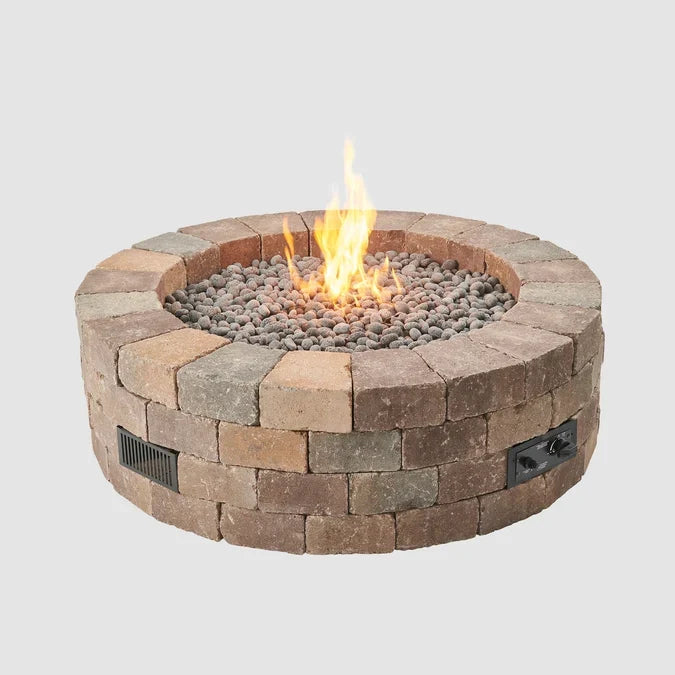
The material used for a commercial fire table's top and base shapes its weight, durability, upkeep needs, look, and how well it holds up in different climates. No single material works best across every situation. The right pick depends on the property's climate, design goals, how often the table needs to move, and how much upkeep the staff can realistically handle.
Here's a comparison of the four most widely used commercial fire table materials: natural stone, porcelain, GFRC, and poured or cast concrete.
Material Comparison
|
Material |
Weight |
Maintenance |
Weather Performance |
Mobility |
Best Fit |
|
Natural Stone |
Heavy |
Moderate–High |
Good with maintenance |
Limited |
Premium properties |
|
Porcelain |
Moderate |
Low |
Excellent |
Good |
High-traffic and coastal properties |
|
GFRC |
Light |
Moderate |
Good with proper sealing |
Excellent |
Custom and mobile installations |
|
Poured Concrete |
Very Heavy |
Moderate–High |
Good with maintenance |
Poor |
Permanent architectural installations |
Real-world performance still comes down to the specific material, fabrication quality, sealant used, how the fire table itself was built, local climate, and ongoing maintenance.
Natural Stone
Natural stone — granite, marble, quartz — remains the classic premium option for commercial fire tables. Since no two slabs look the same, it's especially attractive for upscale hospitality settings where genuine natural materials matter to the overall design.
Stone tends to be heavy and, depending on the type, somewhat porous. Sealing it periodically helps guard against staining and moisture absorption. Weight also matters for tables set on locking casters — caster load ratings need to account for the finished table's full weight, not just the base alone.
In climates with freeze-thaw cycles, getting the material selection, fabrication, drainage, and sealing right is especially critical, since moisture trapped in porous stone can lead to cracking as temperatures shift.
Natural stone works best for properties that prioritize premium looks and authentic materials over lighter weight or lower upkeep.
Porcelain
Porcelain has emerged as a popular substitute for natural stone in commercial outdoor fire tables, especially where low maintenance and weather durability top the priority list.
Exterior-grade porcelain absorbs very little water, making it highly resistant to stains and moisture damage. It's also manufactured specifically for outdoor use, with strong resistance to UV exposure and freeze-thaw cycles.
For commercial settings, porcelain's low-maintenance quality is a real selling point — routine cleaning is usually all it needs, without the regular resealing that natural stone and concrete often demand.
Designers get plenty of flexibility with porcelain, which comes in a wide array of colors, textures, and stone-look finishes. That said, even top-quality digitally printed porcelain can't fully capture the natural variation and depth of real quarried stone. It's also prone to chipping under hard impact, and any repairs tend to be more noticeable than on some natural stone surfaces.
Porcelain fits especially well on busy patios, pool decks, and coastal properties where keeping maintenance minimal is a top concern.
GFRC (Glass Fiber Reinforced Concrete)
GFRC or Glass Fiber Reinforced Concrete has become a go-to material for modern fire tables thanks to its combination of relatively light weight and strong design versatility.
Since GFRC is cast instead of quarried, manufacturers can create custom colors, textures, shapes, and edge details that would be costly or impractical to achieve with natural stone. It's also considerably lighter than traditional poured concrete, a real plus for tables that need regular moving, transport, or shipping.
Manufacturing quality is the main variable to watch. GFRC made with the right fiber content, wall thickness, fabrication process, and sealing can last for years, while poorly made or under-sealed GFRC is more prone to hairline cracks and moisture absorption.
GFRC suits design-driven hospitality projects well, particularly when customization and lighter weight are priorities.
Poured or Cast Concrete
Poured or cast concrete is the heaviest and most substantial of the four options. It's often chosen for permanent installations, where the fire table is meant to serve as an architectural feature rather than a piece of movable furniture.
Concrete offers a lot of room for customization in color, texture, shape, and finish. But like most natural stone products, it's porous and generally needs sealing to help resist staining and moisture damage.
Weight is its biggest drawback for anything mobile. A concrete fire table can put serious strain on casters, flooring, and staff if it needs to be relocated often. Venues that prioritize mobility are usually better served by a lighter material like GFRC or porcelain.
Concrete is the strongest fit for permanent installations where its substantial weight is a non-issue and architectural presence is the main goal.
You may also like
View all

