


Do Commercial Fire Tables Pay Off? A Hospitality ROI Breakdown
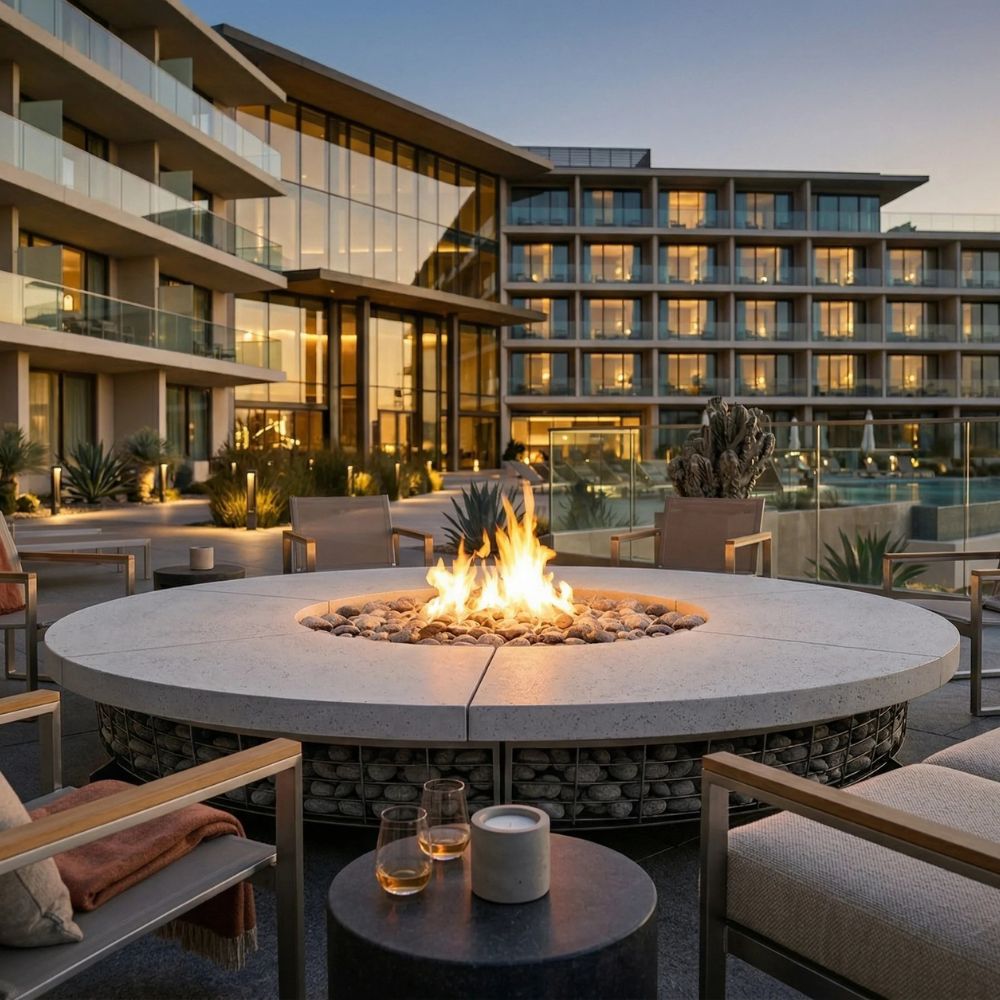
Do commercial fire tables actually pay for themselves? They can — but the payoff isn't generated by the fire table itself. The business case rests on extending the number of hours a property's outdoor seating can produce revenue.
For hotels and restaurants, the real question isn't whether fire tables enhance ambiance or aesthetics. It's whether they make outdoor seating usable across more hours in a day and more weeks in a year. That expanded capacity is what opens the door to incremental revenue - especially in markets with pronounced shoulder seasons.
This guide examines the business case for commercial fire tables, focusing on how outdoor seating, season extension, and hospitality revenue connect.
Does Outdoor Seating Actually Drive Revenue?
In general, yes — outdoor seating can generate substantial added revenue when it expands usable capacity during high-demand periods. Various hospitality and foodservice industry sources have documented notable revenue gains tied to outdoor seating expansion, with some estimates reaching as high as a 30% increase.
That said, the magnitude of the revenue gain differs widely from property to property. Outcomes hinge on variables like added seat count, occupancy levels, average check size, hours of operation, weather conditions, and whether indoor seating is already maxed out.
The key point is that it's the outdoor seating that creates the revenue opportunity — not the fire table on its own. A fire table won't automatically drive sales; its value lies in making outdoor space usable during times when guests would otherwise avoid sitting outside.
Because of this, owners should assess their property's current patio usage and local seasonal weather trends before applying any general outdoor-seating revenue benchmark to a specific fire table purchase.
How Fire Tables Widen the Revenue Window
Fire tables can stretch the window during which outdoor seating stays usable - especially on shoulder-season evenings and during cooler stretches when guests might otherwise head indoors.
Well-specified radiant heat can make outdoor seating a viable option on evenings that would otherwise feel too chilly for most guests. Depending on the climate, that can convert cool spring and fall evenings into extra hours of outdoor dining or hospitality service.
This matters most in areas with pronounced seasonal shifts. In the Northeast, Midwest, Mountain West, and Pacific Northwest, stretching outdoor usability by even a few weeks can meaningfully shift the economics of a patio that would otherwise go unused during colder months.
How much revenue impact this actually produces depends on the property. A restaurant with a patio that's already underused may see minimal upside if there isn't demand for the additional outdoor seats. On the other hand, a property that regularly fills up indoors could have a much stronger case for pushing outdoor seating into more hours and more of the calendar.
So the question ownership should really be asking isn't "What ROI will a fire table deliver?" It's "How many additional revenue-producing outdoor seat-hours can this property realistically unlock?"
You may also like
View all

